





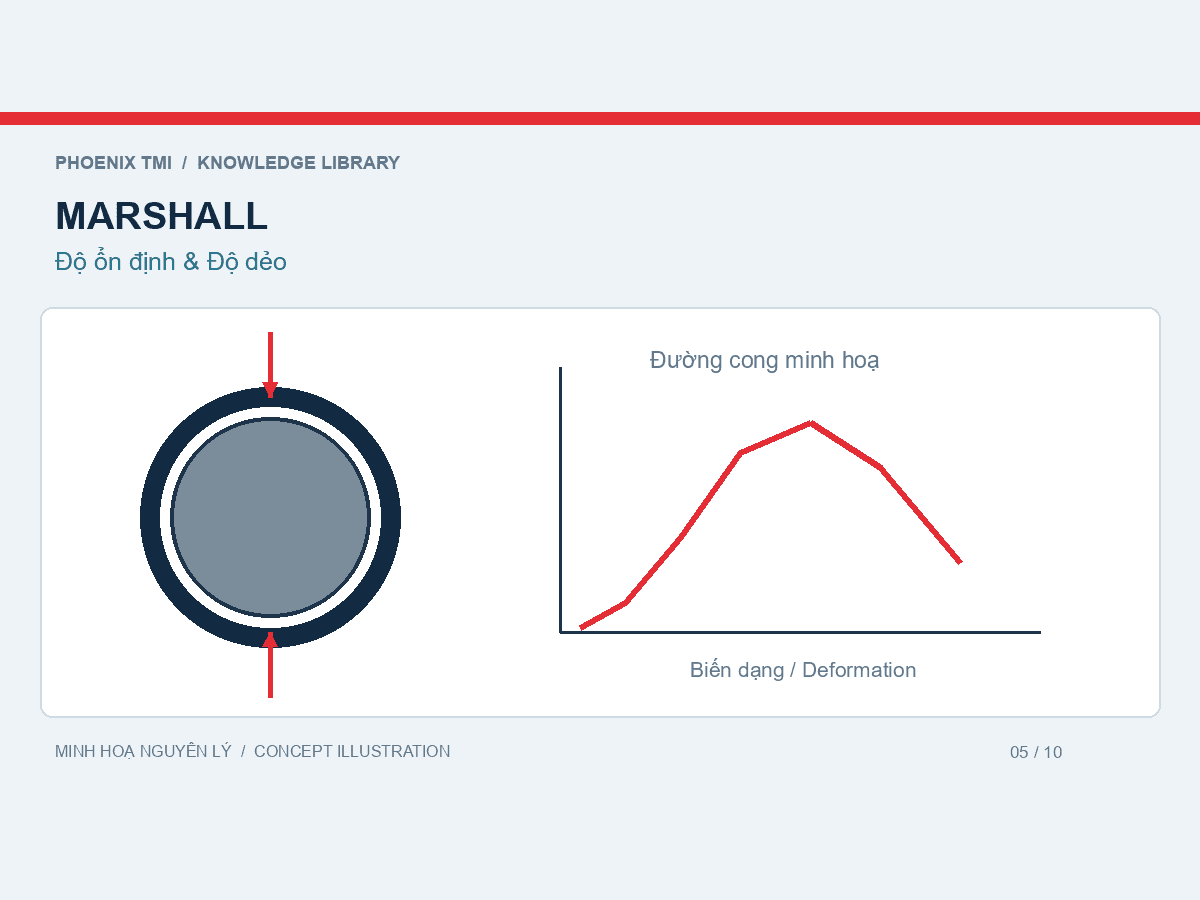
Marshall testing assesses the response of an asphalt mixture specimen through stability and flow. Read these together with specimen preparation, mixture properties and design requirements: the highest load alone does not identify the best mix.
Concept illustration prepared for Phoenix TMI; not measured data or a manufacturing drawing.
Two measurements, different meanings
Measurement | Interpretation |
|---|---|
Marshall stability | Load resistance determined according to the test method. |
Marshall flow | Deformation determined from the load–deformation response using the method. |
Volumetric properties | Complementary information about mixture voids and structure. |
Flow should not be treated as the entire machine crosshead travel. Seating effects and fixture compliance can contribute to movement. Determine the relevant curve points and intervals using the specified method.
Specimen preparation and temperature
Mixture composition, compaction, geometry and temperature conditioning all influence the result. Preserve preparation and conditioning records; results from different thermal conditions are not directly interchangeable.
Use the correct breaking head
Marshall fixtures apply load in a specific arrangement. Flat compression platens are not a substitute. Poor alignment or an unsuitable displacement arrangement can invalidate the intended measurement even when the display produces numbers.
Check the breaking head, specimen position and movement.
Select the operating settings for the required Marshall method.
Verify force and flow channels, units and synchronized recording.
Keep the original curve and specimen identification.
CBR and Marshall require separate setups
A shared loading platform may support both methods when suitably configured, but fixtures, specimen conditions and operating settings differ. For Phoenix TMI Auriga 50 kN, specify each required test and confirm its accessories in the quotation. Do not simply reuse CBR settings for Marshall.
Interpret the full picture
Assess stability, flow and volumetric requirements together. Investigate specimen preparation, temperature, alignment and raw data before attributing an unusual result solely to the material.
References
This article explains principles and equipment selection. Perform testing to the required standard and equipment instructions.


